Screw Pump: Principle, Types, Applications and Maintenance
Working Principle of Screw Pumps
Major Types of Screw Pumps
Archimedes’ Screw Pump (Water Screw): The oldest and simplest type, consisting of a single screw in a cylindrical cavity. It is primarily used for low-tech applications, such as irrigation systems, agricultural grain transport, and wastewater treatment. Its design is simple, low-cost, and easy to maintain, making it ideal for handling large volumes of low-viscosity fluids or solids.
Multi-Screw Pump: Typically featuring two or three spindles, this type is the most widely used in modern industrial settings. The three-spindle screw pump, as mentioned earlier, is preferred for transporting viscous, lubricating fluids (e.g., oil, fuel) due to its symmetrical pressure distribution and minimal wear. Two-spindle models are also available but are less common, as they lack the symmetrical loading of three-spindle designs.
Progressive Cavity Pump (Eccentric Screw Pump): This type uses an eccentric screw rotating within a flexible stator. The eccentric motion creates a series of progressing cavities that trap and move fluid from the suction to the discharge end. It is highly versatile, capable of handling viscous fluids, slurries, and fluids containing solids, making it suitable for applications like sewage treatment, food processing, and chemical transfer.
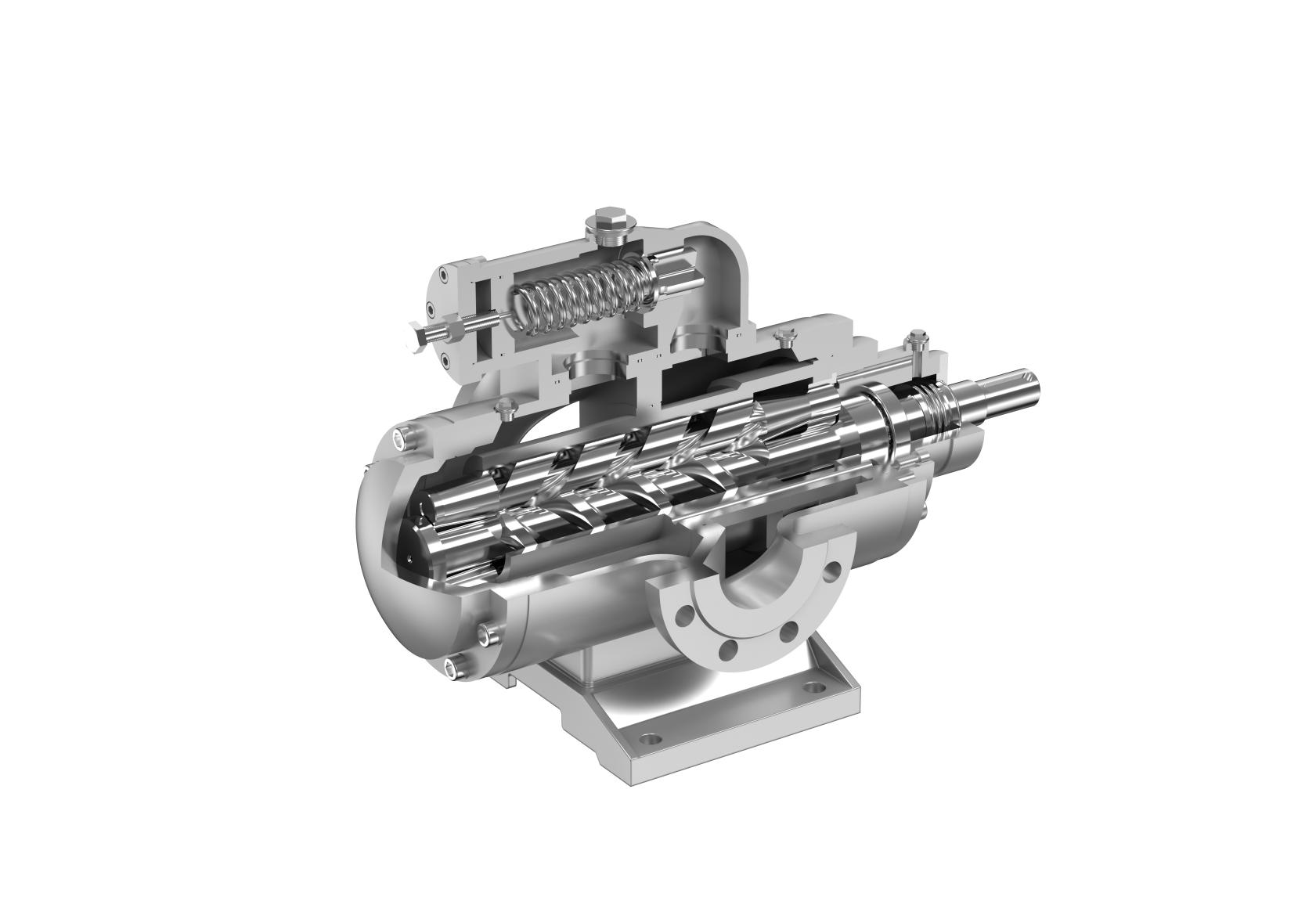
Key Applications of Screw Pumps
Oil and Gas Industry: Used for fuel injection, oil transfer, and crude oil transportation. Three-spindle screw pumps are particularly suitable for this sector due to their ability to handle high-viscosity lubricating fluids and operate reliably under harsh conditions.
Agriculture: Archimedes’ screw pumps are widely used for irrigation, draining flooded fields, and transporting grain or other agricultural solids. Their simple design and low energy consumption make them ideal for rural settings.
Municipal and Wastewater Treatment: Progressive cavity screw pumps handle sewage, sludge, and wastewater containing solids, ensuring efficient transfer without clogging. They are also used in water supply systems for low-pressure, high-volume applications.
Chemical and Pharmaceutical Industries: Used to transfer corrosive, viscous, or shear-sensitive chemicals and pharmaceuticals. The gentle pumping action of screw pumps prevents degradation of sensitive materials.
Marine and Automotive Industries: Applied in engine lubrication systems, fuel transfer, and bilge pumping. Their compact design and high reliability make them suitable for marine and automotive environments.
Advantages and Maintenance Considerations
Advantages
Consistent Flow Rate: As positive-displacement pumps, they deliver a steady flow rate regardless of discharge pressure, making them ideal for applications requiring precise flow control.
Ability to Handle Viscous Fluids: They perform well with high-viscosity fluids, slurries, and fluids containing solids, which would clog or damage centrifugal pumps.
Low Turbulence: The gentle pumping action minimizes fluid turbulence, reducing shear stress and preventing damage to sensitive materials.
Durability: Multi-spindle designs have minimal wear, as the screws are lubricated by the pumped fluid, eliminating the need for additional bearings in some cases.
Compact Design: They have a small footprint, making them suitable for installations with limited space.
Maintenance Tips
Lubrication: Ensure the pumped fluid provides adequate lubrication for the screws and bearings. For non-lubricating fluids, use additional lubricants to prevent wear.
Inspection: Regularly check for leaks, worn screws, or damaged stators (in progressive cavity pumps). Replace worn parts promptly to avoid further damage.
Cleaning: Keep the suction and discharge ports clean to prevent clogging, especially when handling fluids with solids.
Alignment: Ensure the pump and motor are properly aligned to avoid excessive vibration, which can cause premature wear.
Temperature Monitoring: Monitor the pump’s operating temperature to prevent overheating, which can damage seals and bearings.